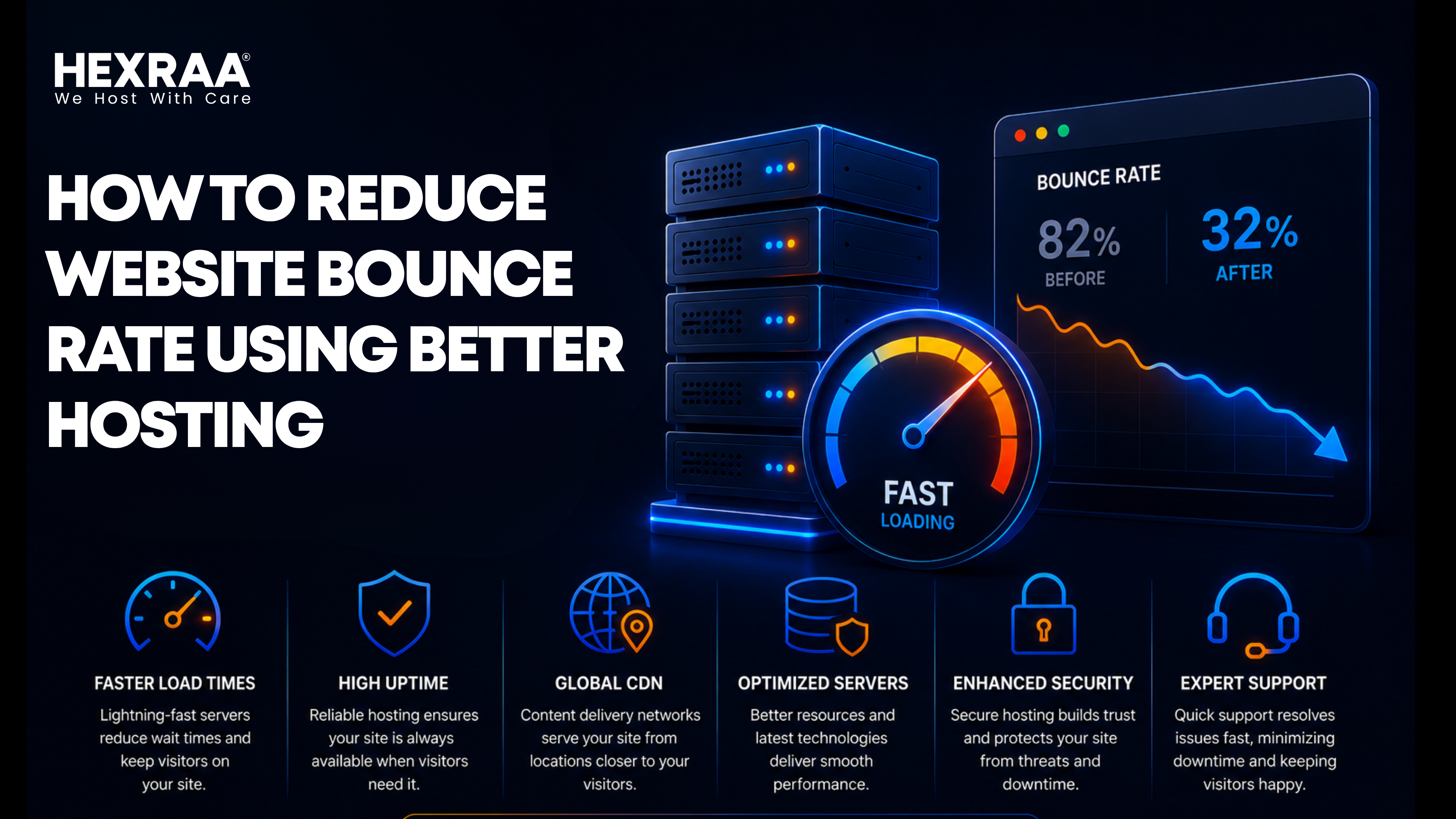
How to Reduce Website Bounce Rate Using Better Hosting
In 2026 user attention is shorter than ever
Visitors expect websites to load instantly and work smoothly across all devices If a website feels slow or unresponsive they leave within seconds
This behavior is measured through a metric known as bounce rate
Bounce rate represents the percentage of users who visit a website and leave without interacting further A high bounce rate is a strong signal that something is not working
While many businesses focus on design and content one major factor behind high bounce rate is often ignored
Hosting performance
What Is Bounce Rate and Why It Matters
Bounce rate is an important indicator of user experience
A high bounce rate usually means Visitors are not finding what they need The website is slow or difficult to use The overall experience is poor
Search engines also consider user behavior when ranking websites This means a high bounce rate can negatively impact SEO performance
Reducing bounce rate is not just about keeping users on your site It is about improving engagement conversions and long term growth
How Hosting Directly Affects Bounce Rate
Every visitor interaction depends on how quickly and smoothly your website loads
Poor hosting can lead to Slow page loading Delayed server response Frequent interruptions
These issues create frustration and cause users to leave before exploring the website
Better hosting removes these barriers and creates a smoother experience
Key Ways Better Hosting Reduces Bounce Rate
1 Faster Page Load Speed
Speed is the most important factor in user retention
When a website loads quickly Users stay longer They explore more pages They interact with content
Slow websites drive users away within seconds
High performance hosting ensures faster data delivery which directly reduces bounce rate
2 Improved Server Response Time
Server response time is the delay between a user request and the start of page loading
With better hosting Requests are processed faster Pages begin loading instantly Users experience less waiting
A faster response creates a positive first impression
3 Stable Website Performance
Consistency is just as important as speed
Unstable hosting can cause Random slowdowns Incomplete page loading Errors during browsing
Reliable hosting ensures a stable experience which keeps users engaged
4 Better Performance on Mobile Devices
A large percentage of users access websites through mobile devices
Mobile users are more sensitive to speed and performance issues
Better hosting ensures Faster loading on mobile networks Smooth browsing experience Improved engagement across devices
5 Handling Traffic Without Slowdowns
When multiple users visit a website at the same time weak hosting can struggle
This leads to Slow performance Server overload Users leaving quickly
Scalable hosting maintains speed even during high traffic which helps retain visitors
Other Factors That Work Along With Hosting
While hosting plays a major role bounce rate is also influenced by other factors such as
Website design Content clarity Navigation structure Page layout
However even the best design cannot compensate for slow performance
Hosting forms the foundation on which all other improvements depend
Common Mistakes That Increase Bounce Rate
Many website owners unintentionally increase bounce rate by
Choosing low quality hosting Ignoring speed optimization Not testing performance regularly Overloading pages with heavy elements
Fixing these issues often starts with improving the hosting environment
How Better Hosting Improves Overall Engagement
A fast and reliable website encourages users to
Browse multiple pages Spend more time on content Complete actions such as sign ups or purchases
This leads to
Lower bounce rate Higher engagement Better conversion rates
The Shift Toward Performance Driven Hosting
Modern websites require more than just basic hosting
Businesses are now focusing on Speed optimized infrastructure Reliable uptime Efficient resource handling
Some newer hosting platforms are adopting advanced technologies to deliver faster performance and better user experience
This shift highlights the growing importance of hosting in website success
Key Takeaways
Bounce rate reflects user experience and website performance Slow hosting is one of the main causes of high bounce rate Faster loading improves user retention and engagement Stable and scalable hosting reduces performance issues Better hosting supports SEO and long term growth
Frequently Asked Questions
What is a good bounce rate for a website
A good bounce rate depends on the type of website but generally lower bounce rate indicates better user engagement
Does hosting affect bounce rate
Yes hosting affects speed and performance which directly impacts bounce rate
How can I reduce bounce rate quickly
Improving website speed through better hosting is one of the fastest ways to reduce bounce rate
Why do users leave a website quickly
Users leave due to slow loading poor performance or difficulty in navigation
Can better hosting improve SEO
Yes faster websites provide better user experience which helps improve search rankings
Is bounce rate important for business websites
Yes a lower bounce rate means more users are engaging which increases chances of conversions