Choosing the right hosting plan is one of the most important decisions for anyone building a website in 2026.
For beginners, startups, and even growing agencies, the most common confusion comes down to two options:
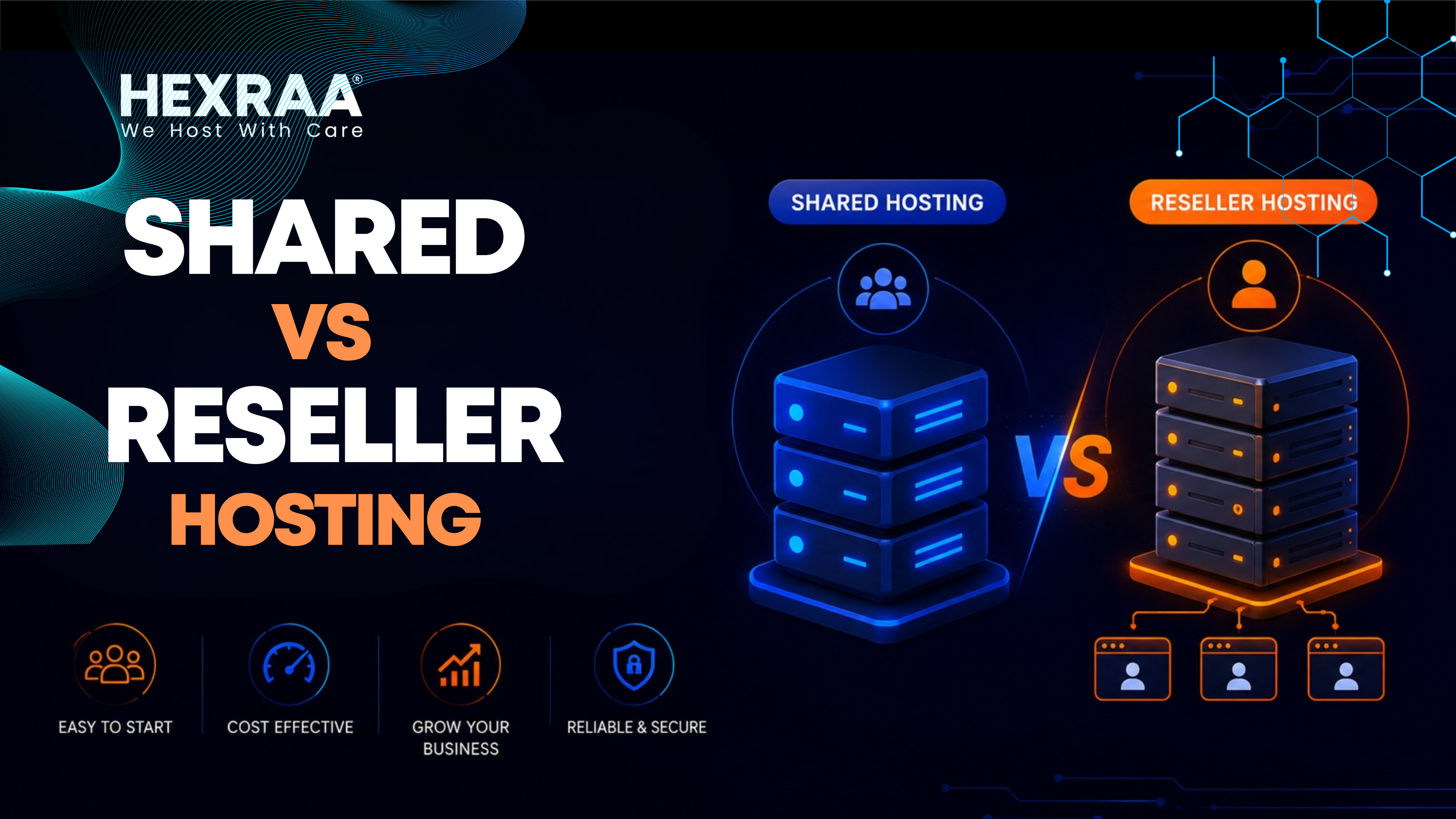
Shared Hosting vs Reseller Hosting
At first glance, both may seem similar. Both are cost effective, both allow multiple websites, and both are popular choices. However, they serve very different purposes.
Understanding the difference is not just technical , it is strategic. The right choice can save costs, improve performance, and even open new revenue opportunities.
At Hexraa , we help users choose hosting based on their goals not just features.
What Is Shared Hosting?
Shared hosting is the most basic and beginner friendly hosting solution.
In this setup, multiple websites share the same server resources including CPU, RAM, and storage. It is designed for:
Personal websites
Blogs
Small business websites
Beginners with low traffic
Because resources are shared, the cost is low, making it an ideal entry point.
Key Characteristics of Shared Hosting:
Affordable pricing
Easy setup and management
No technical expertise required
Limited resources per user
Performance depends on overall server usage
Shared hosting is perfect if your goal is to launch a website quickly without worrying about the server management
What Is Reseller Hosting?
Reseller hosting is designed for users who want to host multiple websites independently or sell hosting services to others.
In this model, you purchase hosting resources and divide them into smaller accounts that you can manage or resell.
It is ideal for:
Web developers
Agencies
Freelancers
Entrepreneurs starting a hosting business
Instead of sharing one account, reseller hosting allows you to create separate accounts for each client or websites.
Key Characteristics of Reseller Hosting:
Ability to create multiple hosting accounts
Independent control for each website
Option to resell hosting services
White label branding (your own brand name)
Higher flexibility and scalability
Reseller hosting transforms hosting from a cost into a potential revenue stream
Shared vs Reseller Hosting: Core Differences
While both hosting types use shared infrastructure, the way they are structured and used is completely different.
Purpose
Shared Hosting: Designed for individual website owners
Reseller Hosting: Designed for managing multiple clients or websites
If you only need one website, shared hosting is enough.
If you plan to manage or sell hosting, reseller hosting is the better option.
Resource Allocation
Shared Hosting: Resources are shared across all users on the server
Reseller Hosting: You get a defined pool of resources to distribute among accounts This gives reseller hosting more control and predictability.
Control and Management
Shared Hosting: Limited control, managed by provider
Reseller Hosting: Greater control with account level management With reseller hosting, you can:
Create and manage user accounts
Allocate storage and bandwidth
Customize plans for different clients
Scalability
Shared Hosting: Limited scalability
Reseller Hosting: Easily scalable for multiple users
As your business grows, reseller hosting adapts better to increasing demand.
Business Opportunity
Shared Hosting: No resale capability
Reseller Hosting: Can generate income by selling hosting This is one of the biggest advantages of reseller hosting.
When Should You Choose Shared Hosting?
Shared hosting is the right choice if:
You are a beginner launching your first website
You have a blog or portfolio
Your traffic is low to moderate
You want a simple, low cost solution
You do not need advanced control
It is the easiest way to get started online without technical complexity.
Common Mistake: Choosing Based Only on Price
Many users choose shared hosting simply because it is cheaper.
However, if your goal is to grow or manage multiple websites, this can lead to:
Performance limitations
Management issues
Need for migration later
Choosing the right hosting from the start saves time, effort, and cost in the long run.
Why Hexraa Makes the Decision Easier
At Hexraa, both shared and reseller hosting are designed with performance, reliability, and scalability in mind.
Whether you are:
Starting your first website
Managing multiple clients
Building a hosting business Hexraa provides:
High performance infrastructure
Easy to-use control panels
Reliable uptime
Secure hosting environments
Scalable plans for growth
Instead of forcing you into one option, Hexraa helps you choose what actually fits your needs.
The Future of Hosting Choices
As digital businesses continue to grow, hosting decisions are becoming more strategic.
Freelancers are becoming agencies. Agencies are becoming service providers.
And hosting is becoming a core part of digital offerings.
Reseller hosting is expected to grow significantly as more professionals look to bundle hosting with their services.
At the same time, shared hosting remains the backbone for millions of small websites worldwide.
Key Takeaways
Shared hosting is best for beginners and single websites
Reseller hosting is ideal for managing or selling hosting services
The main difference lies in control, scalability, and purpose
Choosing the right hosting depends on your long term goals
Reseller hosting can turn hosting into a revenue stream
Final Thoughts
The choice between shared and reseller hosting is not about which one is better it is about which one is right for you.
If your goal is simplicity, shared hosting works perfectly.
If your goal is growth, control, or business expansion, reseller hosting is the smarter choice. With Hexraa, you don’t just get hosting you get the flexibility to grow the way you want.