The Future of Web Hosting: Trends Businesses Must Watch
Web hosting is no longer just a technical necessity. It has become a strategic business decision that directly affects website speed, security, scalability, and customer experience. As digital competition intensifies, companies that understand the future of web hosting will be better positioned to deliver faster, more reliable, and more sustainable online experiences.
Over the past decade, hosting has evolved from simple shared servers to highly distributed cloud ecosystems powered by automation and artificial intelligence. Businesses now expect their hosting providers to do more than keep websites online. They want infrastructure that can adapt to changing traffic patterns, protect against cyber threats, and support emerging technologies.
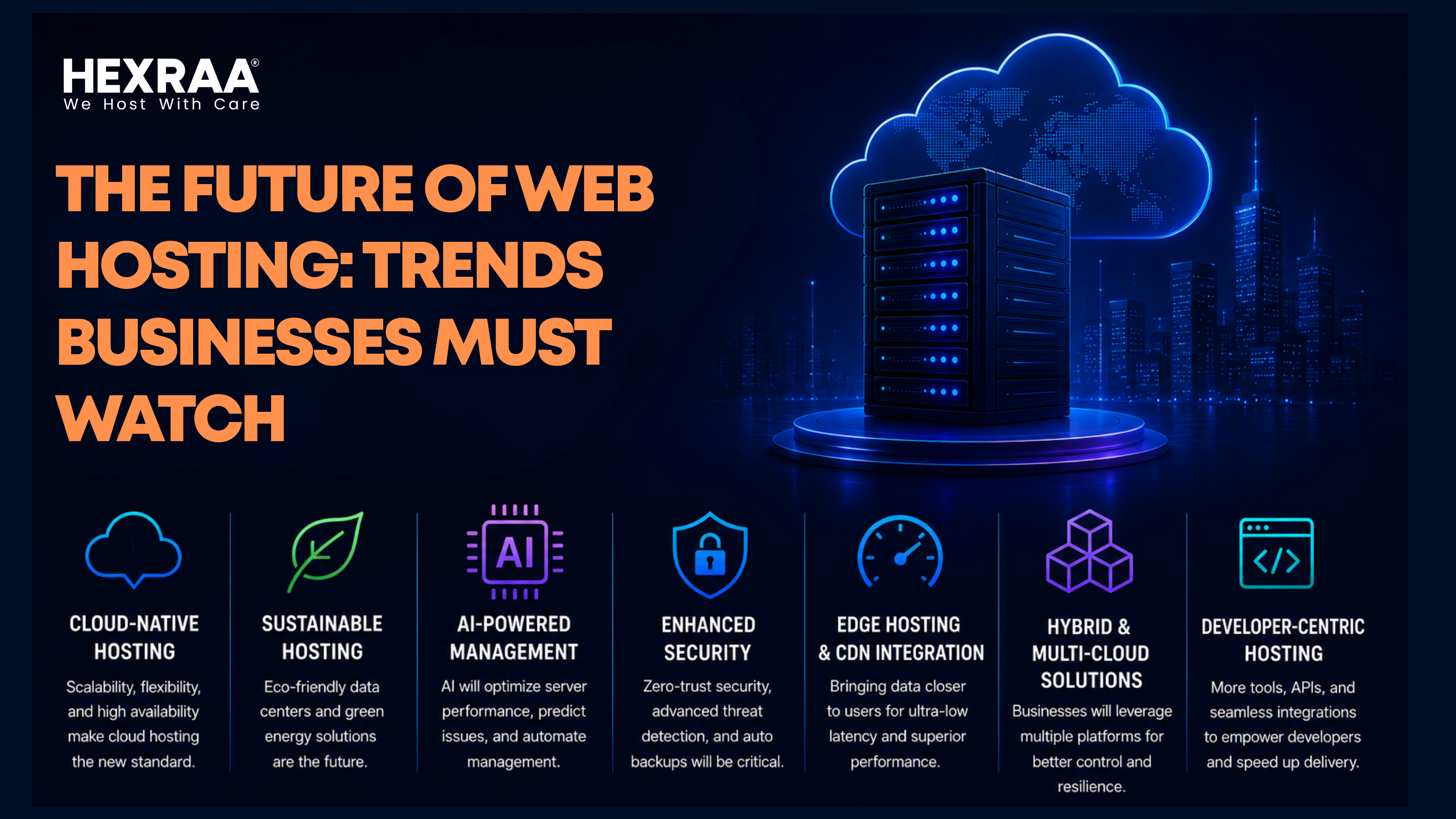
The future of web hosting is being shaped by several powerful trends. Understanding these shifts can help businesses choose the right hosting strategy and stay ahead of the competition.
Why the Web Hosting Industry Is Changing
Modern websites and applications are more demanding than ever. E-commerce stores process thousands of transactions, SaaS platforms serve global users, and content heavy websites need to load instantly on every device.
At the same time, customer expectations continue to rise. Research consistently shows that even a one second delay in page load time can reduce conversions and increase bounce rates.
To meet these demands, hosting providers are investing in new technologies that improve speed, automation, sustainability, and security.
1. Artificial Intelligence Is Transforming Hosting Management
Artificial intelligence (AI) is becoming one of the most significant innovations in web hosting.
Traditionally, server management required constant human monitoring. System administrators had to detect traffic spikes, troubleshoot performance issues, and respond to security threats manually. AI is changing that.
Modern hosting platforms use AI to:
Predict traffic surges before they occur
Automatically allocate resources
Detect suspicious activity in real time
Optimize server performance
Identify potential hardware failures
For businesses, this means better uptime, faster websites, and fewer technical issues.
AI powered hosting also reduces operational costs by automating repetitive tasks. Instead of reacting to problems after they happen, hosting systems can prevent them proactively.
2. Edge Computing Is Reducing Latency
As websites attract users from around the world, latency becomes a critical factor in performance.
Edge computing addresses this challenge by distributing content and processing closer to end users. Instead of relying on a single centralized server, data is served from multiple locations worldwide.
For example, a visitor in Dubai accessing a website hosted in Europe may experience slower load times. With edge computing, key content is delivered from a nearby regional node, significantly improving speed.
Benefits of edge hosting include:
Faster page load times
Reduced latency
Improved reliability
Better user experience
Enhanced SEO performance
For global businesses, edge computing is quickly becoming essential.
3. Green Hosting Is Gaining Momentum
Sustainability is increasingly influencing business decisions, including web hosting.
Data centers consume enormous amounts of electricity, making hosting infrastructure a significant contributor to global energy use.
Green hosting providers address this issue by:
Using renewable energy sources
Implementing efficient cooling systems
Purchasing carbon offsets
Designing energy efficient data centers
Choosing eco friendly hosting offers several benefits beyond environmental impact. It can strengthen brand reputation and appeal to environmentally conscious customers.
As sustainability becomes a core business priority, green hosting is evolving from a niche option to an industry standard.
4. Serverless Hosting Is Simplifying Infrastructure
Serverless computing allows developers to deploy code without managing servers directly.
Despite the name, servers still exist. The difference is that the hosting provider handles all provisioning, scaling, and maintenance.
Businesses only pay for the resources they use.
Advantages of serverless hosting include:
Automatic scaling
Lower operational costs
Faster development cycles
Reduced maintenance
Serverless infrastructure is particularly attractive for startups and applications with unpredictable traffic patterns.
As cloud services mature, serverless hosting will continue to grow in popularity.
5. Containerization Is Becoming Standard
Containers package applications and their dependencies into isolated environments that run consistently across systems.
Technologies such as Docker and Kubernetes have revolutionized application deployment.
Benefits of container based hosting include:
Consistent environments
Easier scaling
Faster deployment
Improved resource efficiency
Better fault isolation
For businesses running custom applications, container hosting provides flexibility and reliability that traditional hosting environments often lack.
6. Cybersecurity Is Becoming More Advanced
Security threats continue to evolve, and hosting providers are responding with stronger protections.
Future hosting environments will increasingly include:
AI-driven threat detection
Web Application Firewalls (WAFs)
DDoS mitigation
Automated malware scanning
Zero Trust architecture
Cybersecurity is no longer optional. A single breach can damage customer trust, impact search rankings, and result in financial losses.
Businesses should prioritize hosting providers that offer robust, built-in security features.
7. Multi-Cloud Strategies Are Expanding
Many organizations are moving beyond a single cloud provider.
A multi-cloud strategy uses services from multiple platforms, such as Amazon Web Services, Google Cloud, and Microsoft Azure.
Benefits include:
Reduced vendor dependence
Greater redundancy
Improved flexibility
Cost optimization
Hosting providers that support multi-cloud deployments give businesses more control over performance and availability.
This trend is especially important for enterprises with global audiences and complex workloads.
8. Managed Hosting Services Are Growing
Not every business has an in-house technical team.
Managed hosting solves this problem by outsourcing server administration to experts.
Typical managed services include:
Software updates
Security monitoring
Backups
Performance optimization
Technical support
Managed hosting allows businesses to focus on growth rather than infrastructure management.
As technology becomes more complex, demand for fully managed solutions will continue to rise.
9. NVMe Storage and High-Speed Infrastructure
Storage technology plays a major role in hosting performance.
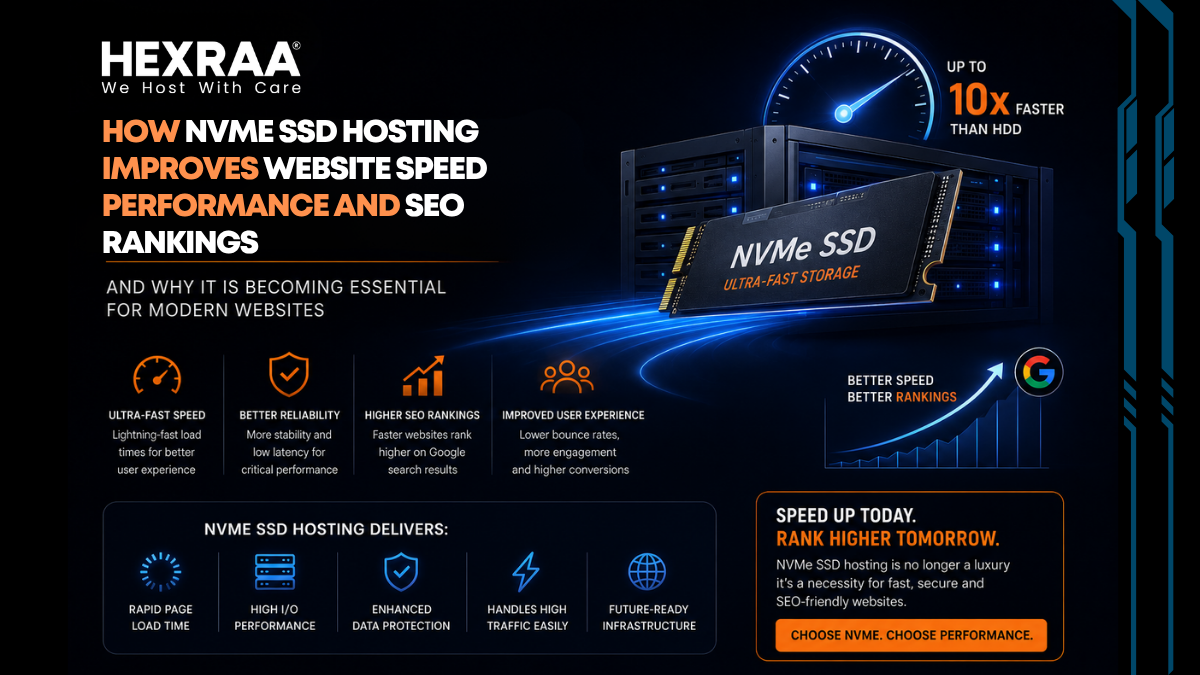
NVMe (Non Volatile Memory Express) drives are significantly faster than traditional SSDs, allowing quicker data retrieval and improved website responsiveness.
Benefits include:
Faster page loads
Better database performance
Reduced server bottlenecks
Hosting providers that invest in cutting-edge hardware can deliver noticeable speed improvements.
10. Hosting Will Become More Specialized
The future of hosting is increasingly tailored to specific use cases.
Examples include:
WordPress hosting
WooCommerce hosting
Magento hosting
Game server hosting
AI application hosting
Specialized environments are optimized for particular applications, resulting in better performance and easier management.
Businesses benefit from infrastructure designed around their exact needs.
What These Trends Mean for Businesses
The future of web hosting offers more than technical improvements. It creates real business advantages.
Companies that adopt modern hosting technologies can expect:
Faster websites
Higher search rankings
Improved conversion rates
Better security
Lower operational costs
Stronger brand reputation
In competitive markets, infrastructure performance directly impacts customer experience and revenue.
How to Prepare for the Future of Web Hosting
Businesses should evaluate their hosting strategy by asking:
Can our hosting scale as traffic grows?
Is our infrastructure secure?
Are we using environmentally responsible solutions?
Does our provider offer automation and AI capabilities?
Are we prepared for global performance demands?
Selecting a forward-thinking hosting partner today can save time, money, and technical headaches in the future.
The Role of Hosting in Digital Success
A website is often the first interaction customers have with a brand.
If the site is slow, unreliable, or insecure, users may leave before engaging with the business.
Modern hosting is a strategic asset that influences:
User trust
Search visibility
Conversion rates
Brand perception
As the internet becomes more sophisticated, hosting will play an even larger role in business success.
Key Takeaways
Artificial intelligence is automating server optimization and threat detection.
Edge computing improves global performance by reducing latency.
Green hosting supports sustainability and strengthens brand reputation.
Serverless and container-based hosting simplify deployment and scaling.
Security and managed services are becoming essential features.
Businesses that embrace these trends will gain a competitive advantage.
The future of web hosting is intelligent, distributed, secure, and sustainable. Companies that understand these trends and invest in the right infrastructure will be better equipped to deliver exceptional online experiences and support long term growth.