The Real Benefits of Colocation: Power, Bandwidth, and Security Explained
In today’s fast paced digital world, businesses depend more than ever on resilient, scalable, and secure IT infrastructure. Whether you’re a small startup or a global enterprise with high data demands, maintaining servers in house can quickly become costly, complex, and risky.
Colocation offers a smarter alternative. By hosting your servers and hardware in a professional third-party data center, you gain access to enterprise grade power, connectivity, and security without the burden of building or maintaining your own facilities. This approach combines cost efficiency with advanced infrastructure making colocation a key component of modern IT strategy.
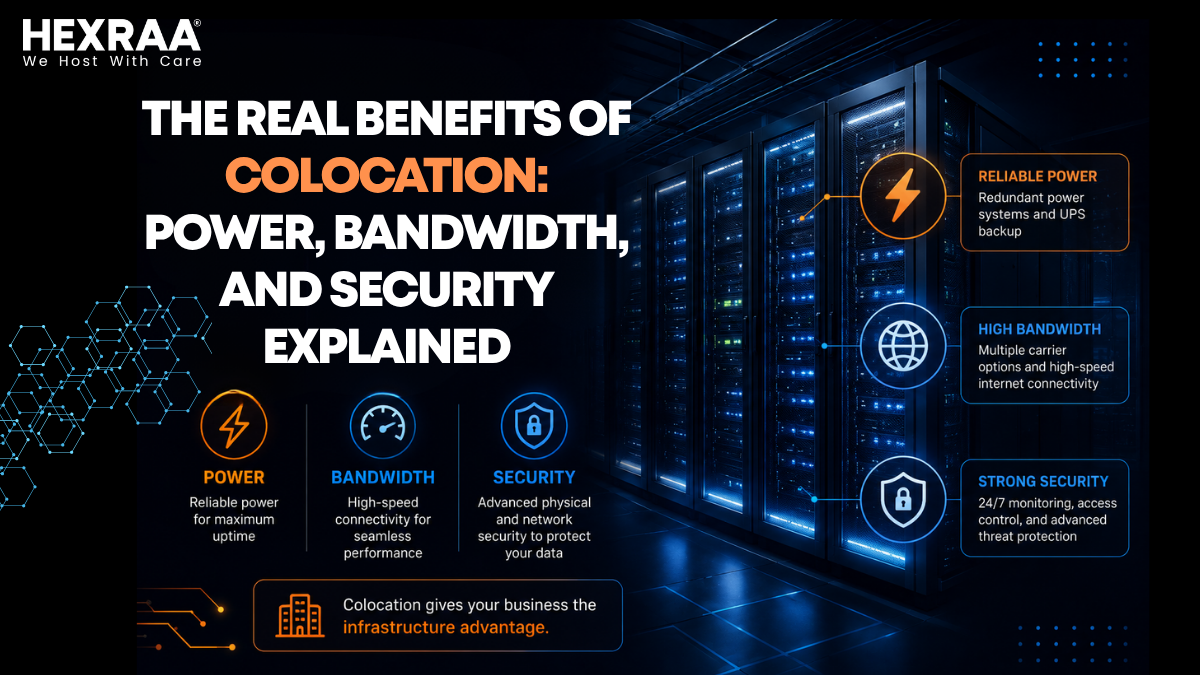
Although scalability and cost savings are frequently mentioned, the deeper advantages of colocation revolve around three pillars: power reliability, bandwidth performance, and enhanced security. Let’s explore each in detail and understand why organizations worldwide are embracing colocation as a cornerstone of digital transformation.
1. Reliable and Redundant Power Infrastructure
Power reliability forms the foundation of every data driven operation. Even brief outages can disrupt services, cause revenue loss, or damage brand reputation. Traditional office setups simply cannot guarantee continuous power supply for critical systems.
Why Power Matters
Every second of downtime may translate into missed transactions, halted services, or frustrated customers. Businesses in regions with frequent power fluctuations face even greater risk, particularly when handling online operations or data heavy workloads.
How Colocation Ensures Reliability
Colocation facilities are built to deliver continuous uptime through multiple layers of redundancy:
Dual or Multi Power Feeds: Many centers draw electricity from independent utility sources. If one feed fails, another instantly activates, minimizing service disruption.
Industrial Backup Generators: High-capacity generators start automatically during outages and undergo regular testing to maintain readiness.
Uninterruptible Power Supply (UPS): UPS units fill the gap between power loss and generator engagement, ensuring servers keep running without interruption.
Real Time Power Monitoring: Intelligent systems track consumption, detect irregularities, and prevent overloads to maintain efficiency.
Business Outcomes
Virtually zero downtime
Consistent operations across all departments
Minimized data loss risk
Forecastable, stable power costs
For businesses operating in power sensitive environments, colocation isn’t just an upgrade, it’s a resilience strategy that safeguards continuity.
2. High Performance Bandwidth and Connectivity
In a connected world, fast and dependable internet is non-negotiable. Poor network performance can slow applications, frustrate customers, and harm productivity.
The Connectivity Challenge
Building high speed networks in private facilities often demands large investment. Relying on one Internet Service Provider (ISP) creates a single point of failure, if that line goes down, operations halt.
The Connectivity Advantage of Colocation
Colocation facilities are engineered for superior network access with carrier neutral architectures and high capacity bandwidth.
Multiple Carrier Relationships: Businesses can choose between several ISPs or use multiple simultaneously to ensure redundancy.
Low Latency Performance: Data centers are strategically positioned near major infrastructure hubs, enabling faster routing and lower latency for global applications.
Seamless Scalability: As data demands increase, bandwidth upgrades are simple and don’t require disruptive changes.
Cloud Interconnectivity: Many colocation providers offer direct links to leading cloud platforms, ideal for hybrid or multi cloud deployments.
Business Outcomes
Smoother customer interactions
Faster application responsiveness
Reliable global performance
Built in network redundancy
Industries such as SaaS, e commerce, finance, and media rely heavily on consistent connectivity. Colocation delivers the bandwidth strength these operations demand.
3. Advanced Physical and Cyber Security
Security remains the top concern for organizations managing sensitive data. Colocation centers are designed with multi-level security protocols that exceed what most companies can achieve internally.
Physical Protection
Professional data centers typically feature advanced safeguards including:
24/7 Surveillance: Continuous camera monitoring ensures complete visibility of all facility areas.
Biometric Access Systems: Fingerprint, facial recognition, or retina scanners restrict entry to authorized personnel only.
On Site Security Staff: Expert security teams manage access control, incident response, and facility monitoring.
Tiered Access Zones: Different authorization levels protect critical areas from unauthorized access.
Cybersecurity Support
While colocation providers focus primarily on physical infrastructure, they extend cyber protection benefits through:
Dedicated DDoS mitigation
Firewall and segmentation capabilities
Secure cross connects
Compliance with international standards like ISO, SOC, and NIST
Compliance Confidence
Many data centers hold certifications enabling businesses to comply with regulations such as:
GDPR for privacy protection
HIPAA for healthcare data
PCI DSS for payment processing security
Business Outcomes
Robust defense against breaches
Simplified compliance and audits
Strengthened customer trust
Enhanced brand reputation for reliability
For organizations handling confidential financial or customer information, colocation provides unmatched peace of mind.
4. Cost Efficiency and Financial Predictability
Constructing a personal data center involves substantial capital spending land, power systems, cooling, and maintenance not to mention staffing. Colocation converts this heavy investment into manageable operational expenses.
Cost Management Perks
No facility construction or infrastructure maintenance burdens.
Shared operational costs among multiple tenants.
Pay as you go flexibility, adapting costs to usage.
Less strain on internal IT staff.
This financial model enables organizations to redirect funds toward innovation, customer experience, and product development rather than hardware logistics.
5. Scalability and Business Flexibility
An agile IT environment is essential for growth. With colocation, scaling to meet new demands is straightforward and disruption free.
Add servers or upgrade configurations as business expands.
Increase bandwidth or storage within minutes.
Deploy in multiple global locations to reach new markets.
Easily integrate hybrid or cloud-based architectures.
Colocation evolves with your company, letting you adjust IT resources in pace with operational needs.
6. Disaster Recovery and Continuity Planning
The unexpected whether natural disasters, cyberattacks, or system failures, can halt operations instantly. Colocation facilities are built to protect against such disruptions.
Geographically Redundant Sites: Multiple locations ensure backup systems remain far from potential disaster zones.
Automated Failover Systems: Workloads instantly transfer to alternative servers during outages.
Backup and Archiving Solutions: Secure data replication minimizes recovery time.
High Availability Frameworks: Ensures mission critical applications stay online even under strain.
These measures collectively make colocation a cornerstone of comprehensive disaster recovery planning.
7. Expert Technical Support and Managed Services
Maintaining uptime and troubleshooting hardware issues can be resource intensive. Leading colocation providers alleviate this burden by offering:
Remote hands and eyes support
Hardware installation and configuration assistance
Continuous network monitoring
Rapid maintenance and problem resolution
With expert teams available around the clock, internal IT departments can focus on strategic planning rather than day to day maintenance.
8. Strategic Location and Infrastructure Advantages
The location of a data center has a direct impact on reliability, connectivity, and disaster risk. Colocation facilities are typically chosen for their stable environments and strong infrastructure.
Access to robust power and communications grids
Proximity to major internet exchanges
Minimal exposure to extreme weather or seismic activity
This strategic positioning bolsters performance for users worldwide and improves redundancy.
Conclusion: A Smarter Path Toward IT Resilience
Colocation is far more than a hosting solution, it’s a long-term investment in operational stability, resilience, and growth. By leveraging professionally managed data centers, businesses gain:
Reliable power systems minimizing downtime
High performance bandwidth that keeps operations seamless
Advanced physical and network security protecting mission critical data
As digital transformation accelerates, organizations that embrace colocation gain scalable, cost efficient infrastructure capable of meeting tomorrow’s demands. Whether you’re optimizing performance, improving resilience, or enhancing compliance, colocation offers the foundation for long term success.
Frequently Asked Questions (FAQs)
1. What is colocation in simple terms?
Colocation means hosting your servers and IT equipment in a specialized data center rather than maintaining them in your own office.
2. How does colocation differ from cloud hosting?
In colocation, you own and control the hardware. Cloud hosting provides virtual resources owned by the cloud provider.
3. Is colocation feasible for small businesses?
Yes, especially for growing organizations needing enterprise level infrastructure without high capital costs.
4. How secure are colocation facilities?
They use multi layer physical security, surveillance, and industry standard cyber protection measures to safeguard assets.
5. Can I scale resources easily at a colocation center?
Absolutely. You can add servers, expand storage, or increase bandwidth whenever needed.
6. What happens during a power failure?
Backup generators and UPS systems ensure uninterrupted power flow until main utilities restore.
7. Do I need a large IT team for colocation?
Not necessarily. Providers offer managed services and remote hands support as needed.
8. Is colocation cost efficient?
Yes, it converts large capital expenses into predictable monthly operational costs.
9. Does colocation support hybrid cloud environments?
Yes, many providers enable seamless connections to cloud platforms for hybrid deployments.
10. What should I look for in a colocation provider?
Focus on location reliability, power redundancy, connectivity options, security protocols, and scalability potential.