Meta Title
The Role of Email Hosting in Building a Professional Brand
Meta Description
Discover how email hosting strengthens your professional brand. Learn benefits, setup options, security, and best practices for business email hosting success.
The Role of Email Hosting in Building a Professional Brand
In today’s digital business environment, your first interaction with a customer often happens through email. Before someone visits your website or speaks with you directly, they may see your email address in their inbox. That small detail can strongly influence how your brand is perceived.
Many businesses start with free email services, which is understandable in the early stages. However, using a generic address can make your business appear less established. In contrast, a custom domain email instantly creates a sense of professionalism and trust. This is where email hosting becomes an essential part of building a strong brand.
Email hosting is not just about sending and receiving messages. It plays a key role in how your business communicates, protects its data, and presents itself to the world.
What Email Hosting Means for Your Business
Email hosting is a service that allows you to use your own domain name for email communication. Instead of using a public domain, your email address is connected directly to your business domain.
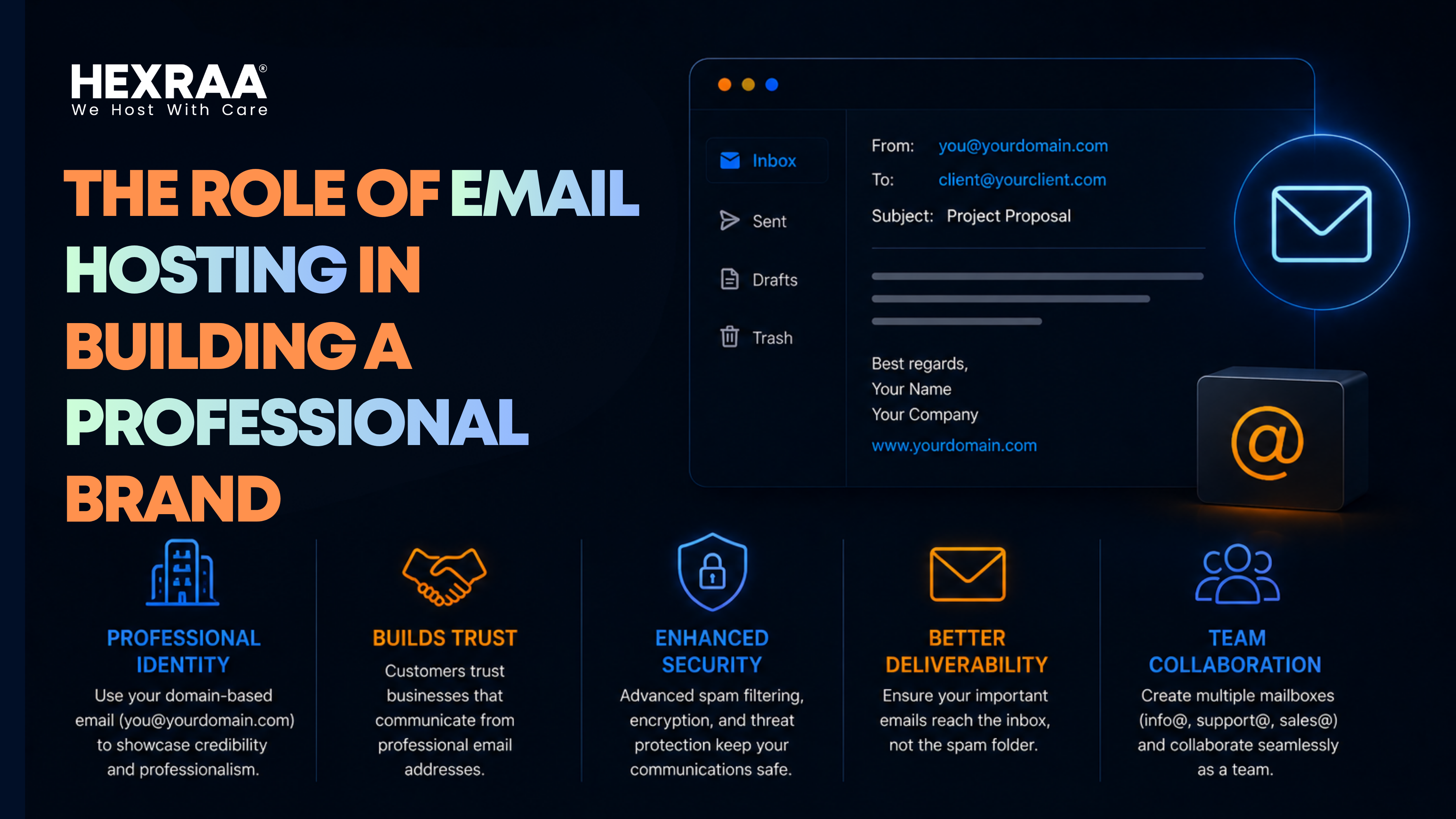
For example, using an address like info@yourcompany.com reflects your brand more clearly than a generic alternative. It shows that your business has invested in its identity and infrastructure.
Most modern email hosting services also include additional features such as spam protection, large storage, mobile access, and integration with productivity tools. These features make communication more efficient and secure.
First Impressions and Brand Credibility
Your email address is often the first branded element a potential client or partner sees. People naturally associate domain based emails with established and trustworthy businesses.
When someone receives an email from a custom domain, it signals that the business is legitimate and professional. On the other hand, a generic email address can create hesitation or reduce confidence.
For example, a proposal sent from contact@yourbrand.com is more likely to be taken seriously than one sent from a free email account. This small difference can influence response rates and business opportunities.
Building Consistency Across Communication
Consistency is a key part of strong branding. Every interaction with your audience should reflect the same identity and tone. Email hosting helps maintain that consistency across all communications.
When your entire team uses domain based email addresses, it creates a unified and organized image. Customers can easily recognize your brand and feel confident they are dealing with the right company.
You can also create structured email addresses for different purposes. Examples include support@, sales@, and info@. This makes communication clearer and improves the overall customer experience.
Strengthening Brand Identity Over Time
Every email you send is an opportunity to reinforce your brand. A custom email domain keeps your business name visible in every interaction.
Over time, this repeated exposure builds familiarity and recognition. Customers begin to associate your domain with your products or services, which strengthens your overall brand identity.
Instead of promoting a third party email provider, you are consistently promoting your own business. This subtle but continuous reinforcement adds long term value.
Enhancing Security and Trust
Security is a major concern for businesses of all sizes. Email is often a target for phishing attacks, data breaches, and unauthorized access. Professional email hosting services provide stronger protection compared to free options.
Most providers offer features such as encryption, multi factor authentication, and advanced spam filtering. These tools help protect sensitive information and reduce the risk of fraud.
When your communication is secure, it also protects your reputation. Customers are more likely to trust a business that takes security seriously. A secure email system shows that you value privacy and professionalism.
Supporting Business Growth and Scalability
As your business grows, your communication needs become more complex. Email hosting allows you to scale your system without losing control or efficiency.
You can easily create new email accounts for employees, set permissions, and manage different departments. This flexibility supports expansion and keeps your communication organized.
For example, as your team grows, you can assign role based email addresses for different functions. This ensures that messages are handled by the right people and reduces confusion.
Improving Team Collaboration
Modern email hosting platforms are designed to support collaboration, not just communication. Many services integrate with tools for file sharing, calendars, and project management.
This makes it easier for teams to work together, especially in remote or hybrid environments. Employees can access shared resources, schedule meetings, and communicate in real time.
For instance, a team can coordinate tasks using shared calendars and documents while staying connected through email. This level of integration improves productivity and streamlines workflows.
Organizing Communication More Effectively
A structured email system helps businesses stay organized. Instead of relying on a single inbox, you can create dedicated email addresses for specific purposes.
Examples include billing@ for payments, support@ for customer service, and partnerships@ for business inquiries. This setup ensures that emails are directed to the appropriate department.
Clear organization improves response times and reduces the chances of missed messages. It also creates a smoother experience for customers who know exactly where to send their queries.
Boosting Marketing and Outreach Results
Email remains one of the most powerful tools for marketing and business outreach. A professional email address increases the effectiveness of your campaigns.
Recipients are more likely to open and trust emails that come from a recognizable domain. This improves engagement and helps your messages reach the intended audience.
In addition, proper email hosting improves deliverability. Your emails are less likely to be flagged as spam, which ensures they reach inboxes consistently.
Protecting Your Brand Reputation
Your brand reputation can be influenced by how your emails are perceived. If your messages appear unprofessional or frequently end up in spam folders, it can damage trust.
Email hosting helps maintain a consistent and reliable sender identity. Authentication protocols ensure that your emails are verified and recognized by receiving servers.
This reduces the chances of your emails being blocked or flagged. As a result, your communication remains trustworthy and effective.
Understanding Cost and Long Term Value
Some businesses hesitate to invest in email hosting, especially when free options are available. However, the long term benefits far outweigh the initial cost.
Professional email hosting improves credibility, security, and efficiency. These advantages contribute directly to business growth and customer trust.
When viewed as part of your branding strategy, email hosting becomes a valuable investment rather than an expense. It supports both your daily operations and your long term goals.
Simple Setup and Integration
Setting up email hosting is easier than many people expect. Most providers offer guided setup processes that include domain verification and configuration.
Once your email system is active, it can be integrated with other business tools such as customer relationship management systems and marketing platforms.
This integration ensures that your communication flows smoothly across all parts of your business. It also reduces manual work and improves overall efficiency.
Enabling Mobile and Remote Access
Modern businesses need flexibility. Email hosting allows you to access your inbox from anywhere using mobile devices or web applications.
This means you can respond to clients, manage communication, and stay updated even when you are not in the office. Mobile accessibility supports faster decision making and better customer service.
It also enables remote work by keeping teams connected regardless of location.
Email hosting plays a central role in shaping how your business is perceived. It influences trust, strengthens your brand identity, and supports efficient communication.
A custom domain email shows that your business is professional, reliable, and serious about its image. It enhances security, improves collaboration, and prepares your business for growth.
In a competitive digital landscape, small details can have a big impact. Email hosting is one of those details that quietly strengthens your brand with every message you send.
FAQs:
1. What is email hosting and how does it work?
Email hosting is a service that lets you create and use professional email addresses with your own domain name (e.g., you@yourbrand.com) instead of generic free emails. It runs on secure mail servers managed by providers.
2. Why is a custom email important for branding?
A custom email builds trust and credibility because it looks more professional than free email services. It also reinforces your brand every time you communicate with customers, partners, or clients.
3. Which email hosting services are best for businesses?
Popular business email hosting providers include Google Workspace, Microsoft 365, and Zoho Mail. These platforms offer security, storage, and productivity tools.
4. Is email hosting necessary for small businesses or startups?
Yes, even small businesses benefit from email hosting because it improves professionalism, increases customer trust, and helps establish a strong brand identity from the beginning.
5. How does email hosting improve security?
Email hosting providers offer advanced security features like spam filtering, encryption, and multi-factor authentication, helping protect business communications from phishing and unauthorized access.